Midwife and lead of the Lost Mothers research project on maternal separation in prison reviews Baby, a co-production from Clean Break and Brixton House
I have spent much of my working life as a midwife and researcher listening to women describe pregnancy, birth and separation from their babies in prison. Even so, after seeing Baby I left Brixton House feeling speechless.
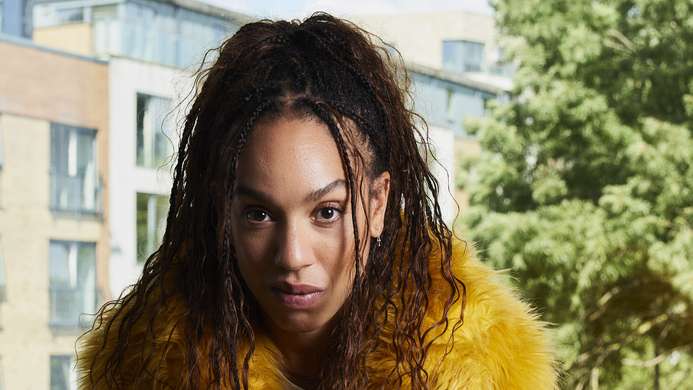
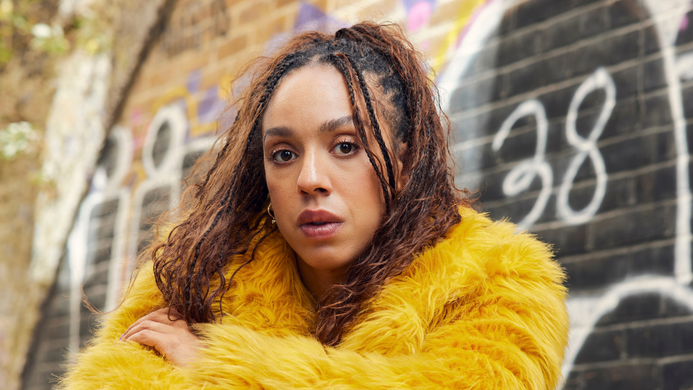
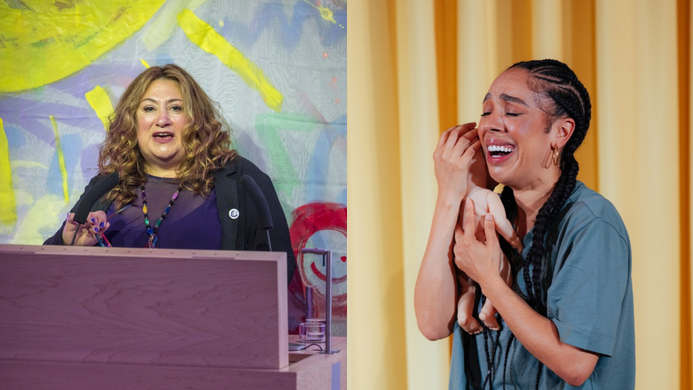
Pearl Mackie was utterly convincing, but what struck me most was that although Baby is a one-woman show, she represents so many of the women we have met, and like them, she does not want our pity. I admired her courage and her resilience. I also felt her exhaustion at the system, and I wondered how many of us could survive what she has survived. I felt angry that it takes so much to change systems that do not put women at the centre, and that do not properly value the staff who are placed in them to help. These systems need to be joined up, and they need proper investment and action.
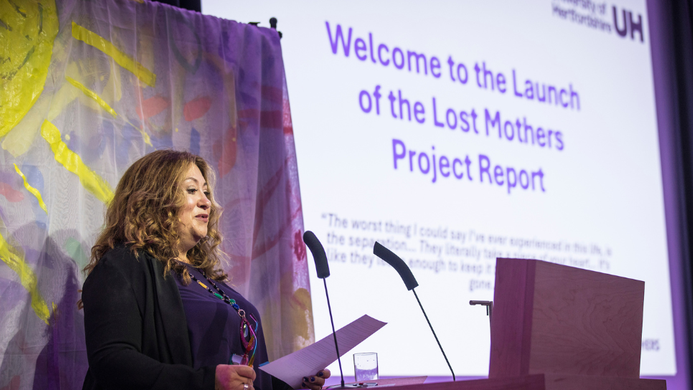
I lead the Lost Mothers research project, which was co-produced with women who have lived experience of pregnancy and motherhood in prison, in partnership with the charity Birth Companions. Our latest report, published in May 2025, drew on a 12-month study of interviews and observations in five women’s prisons in England. We describe compulsory separation of mothers and babies as “devastating and draconian”, and the mothers told us of the profound, visceral pain of having their babies taken from them. The staff carry this too and described the strain of working with too little training and too few resources in a system that was never built around the women in it.
None of Baby’s story has been invented for the stage. Writer Gurpreet Kaur Bhatti is meticulous in ensuring authenticity. In my research I have heard the same story told in different voices, again and again. Women in prison are overwhelmingly women who have been let down long before they ever reached court. What Gurpreet captures so precisely is how those failures accumulate, until the system then punishes the woman for the consequences of its own neglect.
Gurpreet Kaur Bhatti has written a woman who refuses to be reduced to a case file. Baby is witty, sharp, raw and, at times, confrontational. The play opens with a trigger warning, spoken by Baby herself, and from then on she speaks directly to us and does not let us off the hook. As she tells her story from childhood to the present day, we watch service after service fail her.
She has to repeat her story to social workers, probation officers, solicitors, support workers describing herself as a “pile of hours turned into pages in a fat file”. This is so true to life and just how women in the system tell us they feel.
Towards the end of the play is the scene that stayed with me most. Baby is at her lowest, so lost and unwell that she does not know whether she is awake or asleep. Through the blur she sees Gill, her daughter’s foster carer. Gill puts her arms around Baby, and for the first time she lets herself go and feels a little of the love she has needed all her life. This small, almost hidden act of tenderness was the most poignant moment of the play for me. As the anger and the loudness fall away, we see a tender vulnerability in Baby: a human who wants to be like any other woman.
Baby is not a victim. She is a survivor. Throughout, she is loud, funny, angry and Gurpreet’s writing lets her unravel slowly, one complex layer at a time.
There is a moment in the play when Baby says, almost in passing, “Angel in the next bed keeps (cutting her wrists) which can be quite off-putting when you’re trying to read your library book.” It is said lightly, and it tells us everything about prison. It warehouses pain and trauma, and it makes the unbearable ordinary. The women inside could be any of us, simply victims of circumstance, of where and when they were born.
The play does not shy away from pregnancy, birth and maternal separation in prison. As a midwife, I know that no prison can be a safe place to be pregnant or to give birth. Specialist midwives have made a real difference, but better care inside prison is not the answer. We need alternatives to prison for pregnant women and new mothers. Women have given birth alone in their cells. Babies have died. These are not abstract risks; they are tragedies that the campaign to end the imprisonment of pregnant women and new mothers exists to prevent.
When Baby goes into labour, she is bent double in pain, and “Angel stops piercing her skin with scissors, to press the alarm.” Angel is traumatised and hardly knows her, yet she holds Baby’s hand, tells her she loves her, and does not let go until help arrives. This is solidarity in prison, and I have seen it many times in my research. Women who have nothing, and who are hurting themselves, still look after each other.
The play gets the experience right. Baby and Angel are left waiting too long for help to arrive. When staff finally do show up, they do not believe she is in labour until one of them sees her swollen abdomen. As a midwife, I know how much depends on being listened to when labour begins, and how dangerous it is when that does not happen.
When Baby sees her daughter for the first time, the love is immediate. Oxytocin rushes through a mother’s body in labour and in the first minutes of holding a baby. For many women the feeling is love, awe and joy all at once, and it is physical. It does not depend on who she, her societal status or where she gives birth. Some mothers feel it more slowly, but the bond is there, and it is real. The women in my research described this love. This is why separation is so devastating. A bond like this, whether it comes at once or grows over time, cannot be cut without pain. Baby named her daughter Bliss because that is what Bliss represents to her. The women in our research told us of intense physical and emotional pain, and we have written about it as profound and visceral. Pearl Mackie as Baby makes us feel that.
Prison is not where Baby’s struggle ends. On release she faces many of the barriers set out in our Lost Mothers policy briefing: homelessness and instability, poor planning before release, fragmented services, and no continuity of care at the point of leaving custody. Together these barriers set women up to fail.
Our brief, published in July 2026, found that the greatest shortfall in support comes at the point of release, when women are often discharged without safe accommodation or adequate support. Prisons have a policy framework for pregnant women, mothers and babies, but probation has nothing comparable. One mother told us: “It’s like you keep putting me here, rehabilitating me, getting me healthy, and then you release me to nothing and no support, no home.”
The play makes this vivid. Baby shows us that the struggle is felt in the body. As an audience it was frustrating to watch, because at every turn there is another barrier. Watching Baby try to build a life for herself and her daughter, Bliss, I was reminded that release is too often treated as the end of a sentence rather than the beginning of recovery. A mother can leave prison with nowhere safe to live and no clear route back to her child and be expected to prove herself against odds that are stacked against her from the start. Our research shows that this gap leads to avoidable separation, relapse, mental health crisis and recall to prison.
HM Prison and Probation Service figures for 2024 to 2025 show that about 200 pregnant women spend time in women’s prisons in England each year, and about 50 to 60 give birth in custody. Yet there is no national data on mothers separated from their babies because of imprisonment. If we do not count them, how can they count? This is why mandatory data collection on maternal separation is one of our priority actions.
I have long believed that the arts are among our most powerful political tools. Research can tell us what is happening and why; policy briefings can tell decision-makers what must change. But it is often a story that moves people to act. Working with Gurpreet and Clean Break on Scenes from Lost Mothers, which toured in 2025, I saw audiences of prison staff, midwives, students, policy makers, lawyers, women with lived experience respond in ways that no academic paper could provoke.
I remember very clearly when Gurpreet first spoke with our Lost Mothers team, including our team members who had experience of prison and of being separated from their babies. She asked us to trust her with their stories. When Scenes from Lost Mothers toured in 2025, I saw why. Clean Break brought the research to life, and Gurpreet’s talent for turning it into theatre made the loss of separation visceral for the audience.
Baby goes further still. Because Baby speaks directly to us, we cannot remain spectators. We are made witnesses, and witnesses carry responsibility. Clean Break’s decades of work with women with lived experience of the criminal justice system gives this production an authenticity that cannot be faked, and Brixton House offers it a home where stories of social impact are championed.
The play ends with a glimmer of hope, and with a request: that we take Baby’s story with us as we move through the world. I would ask the same of everyone who sees it. Take her story to your workplace, your MP, your community. Ask why we still send pregnant women and new mothers to prison when we know the harm it causes. Ask why women leave prison without the housing, healthcare and support they need to keep their families together.
Change is possible. Recent sentencing and bail reforms aim to reduce the use of custody for pregnant women and mothers. However, these reforms are currently not matched by a system capable of safely supporting all women in the community. We are calling for a probation policy framework equivalent to that in the prison system. But change will only come if enough of us refuse to look away. Baby makes looking away impossible.
Professor Laura Abbott is a Midwife, Professor of maternal health and criminal justice at The University of Hertfordshire, Birth Companions' volunteer and leads the Lost Mothers project. She founded the specialist prison midwives action group and co-founded Pregnancy in Prison Partnership International (PiPPI) and is a leading voice in the campaign to end the imprisonment of pregnant women and new mothers, calling for community alternatives to prison and seamless transitions into the community for those who are released.
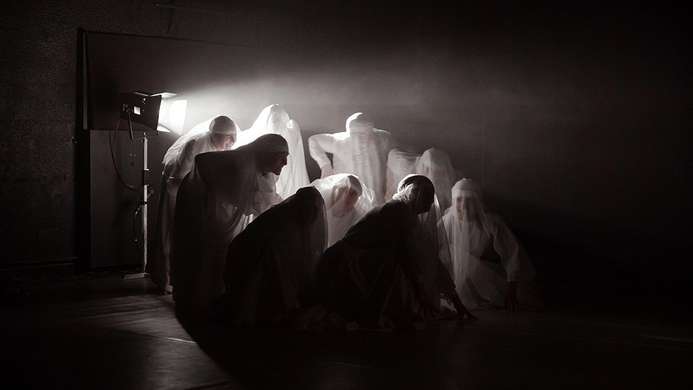
Baby production photo by Helen Murray